Raynaud's
Disease, Numb, Cold Fingers or Toes, Symptoms and Treatment
Definition Episodic vasospasm (constriction of small arteries)
of the fingers or toes. It is characterized by digital (fingers
or toes) blanching or white color, cyanosis (blue), a feeling of
numbness or dulled sensory response and rubor (red) after cold exposure
and rewarming. It can also be induced by anxiety or stress. This
condition is primarily confined to the fingers and toes but can affect
areas of the body such as your nose, cheeks, ears and even tongue.
Primary Raynaud's phenomenon
is also called Raynaud's disease. Criteria
for Raynaud's disease include episodic digital ischemia (sequence
of color changes in the skin in response to cold or stress), a
numb, prickly feeling of the fingers, or stinging pain upon warming
or relief of stress, absence of arterial occlusion, bilateral distribution,
absence of symptoms or signs of other diseases that also cause
Raynaud's phenomenon, and duration of symptoms for 2 years or longer.
Most people with Raynaud's Disease develop symptoms before they
reach 40 years of age. It can occur in young children. Raynaud's
Disease affects women three to five times more frequently than
men. The prevalence is lower in warm climates than in cold climates.
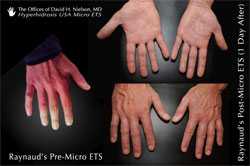
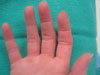
After
- Micro ETS Surgery - Symptoms Immediately
Resolved.
Etiology The mechanisms
postulated to cause Raynaud's phenomenon include increased
sympathetic nervous system activity, heightened digital
vascular reactivity to vasoconstrictive stimuli, circulating vasoactive
hormones, and decreased intravascular pressure. The sympathetic
nervous system mediates the digital vasoconstrictive response to
cold exposure and emotional stress but has been discounted as a
primary mechanism. Some investigators have suggested that
increased sensitivity, increased numbers of postsynaptic alpha2-adrenergic
receptors, or both enhance the vasoconstrictive reactivity to sympathetic
stimulation.
STAGES OF RAYNAUD'S
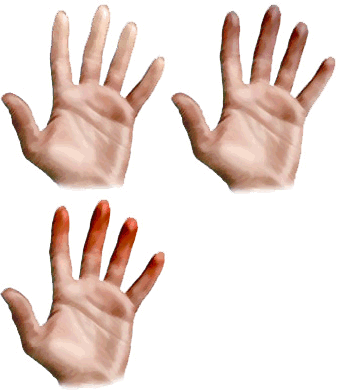
Blanching represents
the ischemic (lack of adequate blood flow) phase of the phenomenon,
caused by digital artery vasospasm.
Cyanosis results
from deoxygenated blood in capillaries and venules (small
veins).
Hyperemic phase,
upon rewarming and resolution of the digital vasospasm, the
digits appear red.
Raynaud's can be a primary
or secondary disorder.
In some cases of Raynaud's phenomenon,
endogenous vasoactive substances (e.g., angiotensin II, serotonin,
and thromboxane A2) and exogenous vasoconstrictors (e.g., ergot
alkaloids and sympathomimetic drugs) may cause digital vasospasm.
Many patients with Raynaud's phenomenon have hyperhidrosis (sweaty
palms).
Diagnosis Temperatures of the fingers or toes can be
measured as low as 70 degress Fahrenheit. Noninvasive vascular tests
that are occasionally used to evaluate patients with Raynaud's disease
include digital pulse volume recordings and measurement of digital
systolic blood pressure and digital blood flow. Nailfold
capillary microscopy is normal in patients with Raynaud's disease,
whereas deformed capillary loops and avascular areas are present
inpatients with connective tissue disorders
or other causes of digital
vascular occlusion.
Determinations of the erythrocyte
sedimentation rate and titers of antinuclear antibody, rheumatoid
factor, cryoglobulins, and cold agglutins are useful to exclude
specific secondary causes of Raynaud's phenomenon. Angiography
is not necessary to diagnose Raynaud's phenomenon but may be indicated
in patients with persistent digital ischemia secondary to atherosclerosis,
thromboembolism, or thromboangiitis obliterans to identify a cause
that may be treated effectively with a revascularization procedure.
Past medical history is most important
in making the diagnosis of Raynaud's disorder.
Differential
Diagnosis Raynaud's phenomenon should be distinguished from
acrocyanosis, a condition in which there is persistent bluish discoloration
of the hands or feet. Like Raynaud's phenomenon, cyanotic discoloration
intensifies during cold exposure, and rubor may appear with rewarming.
Acrocyanosis affects both men and women, and the age at onset is
usually between 20 and 45 years. The prognosis of patients with
idiopathic acrocyanosis is good, and loss of digital tissue is
uncommon. Patients should avoid cold exposure and dress warmly.
Pharmacologic intervention usually is not necessary. Alpha-adrenergic
blocking agents and calcium channel blockers may be effective in
some patients with acrocyanosis.
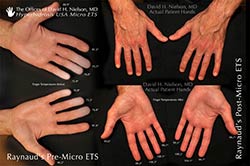
Before - Micro
ETS™
(Click to Enlarge) RESULTS MAY VARY FROM PERSON TO PERSON.
After
- Micro ETS™
Severe Finger Pain Immediately Resolved with Warming, Excellent
Pink Skin Color. RESULTS MAY VARY FROM PERSON TO PERSON.
Treatment (including "State-of-the-Art" Micro
ETS™)
Patients with Raynaud's phenomenon should
avoid unnecessary cold exposure and wear warm clothing. In addition
to the hands and feet, the trunk and head should be kept warm
to avoid reflex vasoconstriction. Clinical
Results - Patient's Fingers Saved(Patient Story) Pharmacologic
intervention is indicated in patients who do not respond satisfactorily
to conservative measures. Calcium channel blockers, such as nifedipine,
and sympathetic nervous system inhibitors, such as prazosin and
its longer-acting analogues, can be used to treat Raynaud's in
some individuals. Oral vasodilator prostaglandins are currently
under investigation.Surgical
sympathectomy up until recently, has rarely been advocated due
to the extreme invasiveness of most surgeon's techniques.
Today, patients afflicted
with Raynaud's disorder have available to them a revolutionary approach
to treat their affliction. Dr. David H.
Nielson offers
patients a minimally invasive technique he calls "Micro
Single Incision ETS" (endoscopic thoracic sympathectomy)
through a single 1/12th inch axillary incision. This affords patients
with Raynaud's a much less invasive approach in treating their disorder.
Upon completion of bilateral Micro ETS of T2 and T3, patients awaken
in the operating room with warm and dry fingers and hands. *
information gathered in part from "1998,
Scientific American Inc."